
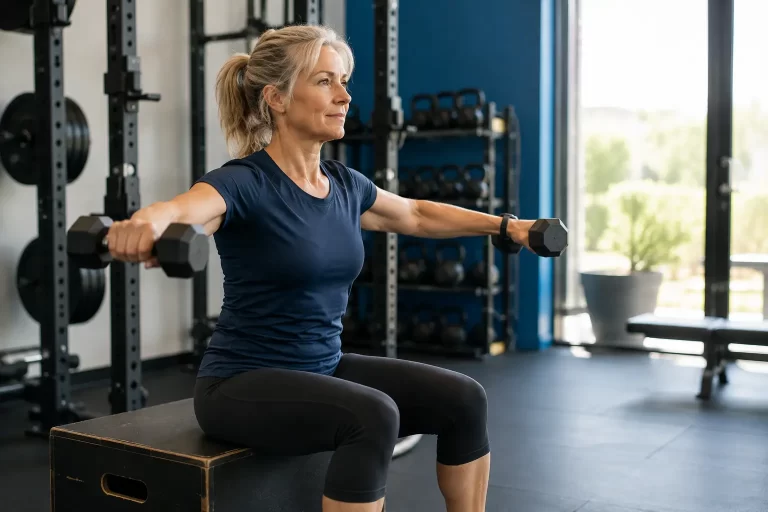
Starting weight training in your 50s can feel a little intimidating.
Walk into a gym and you’re surrounded by machines, dumbbells, barbells and people who seem to know exactly what they’re doing.
But you don’t need to be an experienced lifter to start.
Weight training for women over 50 can begin with simple movements and gradually progress as your strength, confidence and experience grow.
The goal isn’t to train like someone else.
It’s to build a body that is better prepared for the things you want to keep doing in everyday life.
What Is Weight Training?
Weight training simply means using resistance to challenge your muscles.
That resistance might come from:
Dumbbells
Barbells
Gym machines
Cable machines
Kettlebells
Resistance bands
Your own body weight
There’s no single exercise that everyone over 50 needs to do.
A useful program considers your current ability, training history and what you want your body to be able to do.
Is It Too Late to Start Weight Training After 50?
No.
You also don’t need to have exercised your whole life before picking up a weight.
Some people start strength training after years away from the gym. Others have never followed a structured strength program before.
The important part is choosing an appropriate starting point.
At Coastline Performance and Health, we don’t expect someone new to strength training to walk in and immediately start lifting heavy barbells.
We first want to understand how you move, what you’re comfortable with and what you’d like to work towards.
Then we build from there
Why Is Strength Training Important as We Get Older?
Think about what everyday life asks your body to do.
Getting out of a chair requires leg strength.
Carrying shopping requires grip, arm and upper-body strength.
Walking up stairs requires your legs to repeatedly produce force.
Playing with kids or grandkids can involve getting down to the floor and standing back up.
These might not look like gym exercises, but they all rely on physical capacity.
That’s why strength training over 50 doesn’t have to be about lifting the biggest weight in the gym.
It can be about building capacity for life.
What Exercises Should Women Over 50 Do?
There isn’t one perfect list.
However, a well-rounded strength program will often include different movement patterns.
1. Squatting movements
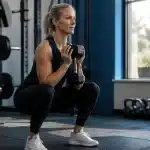
Squats can help develop lower-body strength.
The starting point could be as simple as standing up from a bench.
Over time, that might progress to a goblet squat, machine variation or barbell squat depending on the person.
2. Hinge movements
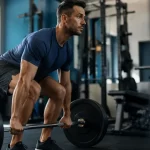
A hinge involves bending through the hips while controlling your trunk.
Deadlift variations are one example.
These movements can help develop the strength used when picking things up from the floor.
3. Pushing movements
Examples include chest presses, overhead presses and push-ups.
The exercise can be adjusted depending on current strength and comfort.
4. Pulling movements
Rows and pulldowns are common examples.
These exercises train muscles around the upper back, shoulders and arms.
5. Carrying movements
Carrying dumbbells or kettlebells might look simple, but it can challenge your grip, trunk and whole-body strength.
It also has an obvious connection to everyday tasks.
How Heavy Should You Lift?
You don’t automatically need light weights because you’re over 50.
You also don’t need to start with the heaviest weight you can manage.
The right resistance depends on your current ability, exercise experience and the movement being performed.
A weight should provide enough challenge to make the exercise meaningful while still allowing you to perform it with appropriate control.
As you become stronger, the exercise can gradually progress.
That might mean adding weight.
But progression could also mean completing another repetition, improving technique, increasing range of movement or choosing a more challenging variation.
What If You Haven’t Exercised for Years?
Start where you are.
Not where you think you should be.
This is where many people make training harder than it needs to be.
You don’t have to make up for years without exercise in your first month back.
A more useful approach is to build a routine you can actually maintain.
For some people, that might begin with two structured strength sessions each week.
The program can then change as your capacity and confidence develop.
What If You’ve Had Pain or an Old Injury?
An old injury doesn’t automatically mean strength training is off the table.
But it may change how you start.
Exercise can be modified by adjusting things such as:
Weight
Range of movement
Repetitions
Exercise selection
Training volume
Speed
Frequency
This is one reason some people choose to work with an Accredited Exercise Physiologist when returning to exercise.
An Exercise Physiologist can consider your health history, current capacity and goals when planning exercise.
The aim isn’t to make exercise unnecessarily cautious.
It’s to find a starting point that makes sense for you.
How Often Should Women Over 50 Strength Train?
There isn’t one schedule that suits everyone.
Your training frequency depends on your current fitness, goals, recovery, health and other physical activity.
Consistency matters more than trying to fit in as many sessions as possible.
For someone new to resistance training, a smaller number of structured sessions can provide an opportunity to learn the movements and build a regular routine.
The program can then progress as needed.
Do You Need Machines or Free Weights?
Both can be useful.
Machines can provide a straightforward way to learn resistance training.
Dumbbells and barbells provide different exercise options and can be progressed over time.
One isn’t automatically better.
At Coastline, we use strength and conditioning principles rather than locking everyone into one type of training.
Your program should reflect what you’re working towards.
What Does a Beginner Strength Program Look Like?
A beginner program doesn’t need 15 different exercises.
It might include:
A squat or sit-to-stand variation
A hinge movement
An upper-body push
An upper-body pull
A carrying or trunk exercise
The exact exercises, resistance and number of sets will vary from person to person.
A good program should also have a clear way to progress.
That’s what turns random workouts into training.
How Coastline Approaches Strength Training Over 50
At Coastline Performance and Health, our Exercise Physiologists and Strength and Conditioning Coaches take a strength-first approach.
We don’t want people spending months doing exercises without understanding why they’re doing them.
We start by listening.
What would you like to keep doing?
What activities matter to you?
What does your body currently need to handle?
From there, we can assess your starting point and build a structured strength program around it.
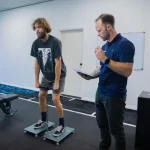
Where appropriate, we also use VALD technology, including ForceDecks and DynaMo Plus, to gather objective information about physical capacity and monitor changes over time.
It’s another tool that can help us make informed decisions rather than relying only on guesswork.
Frequently Asked Questions About Weight Training for Women Over 50
Is 50 too old to start lifting weights?
No. People can begin resistance training at different stages of life. The starting exercises and resistance should reflect the person's current ability, experience and health.
Should women over 50 lift heavy weights?
There isn't one weight that is considered "heavy" for everyone. Resistance can gradually increase as someone develops strength, technique and confidence.
Are machines better than free weights after 50?
Not necessarily. Machines, dumbbells, kettlebells and barbells can all have a place in a strength program. Exercise selection should depend on the person and their goals.
How many times a week should a woman over 50 lift weights?
The appropriate frequency varies. Training history, other activity, goals and recovery all matter. A structured program can help determine an appropriate amount of training.
What's the difference between exercise and strength training?
General exercise can include walking, cycling, swimming and other forms of physical activity. Strength training specifically uses resistance to challenge muscles and progressively build physical capacity.
Want to Feel More Confident With Strength Training?
You don’t need to walk into a gym already knowing what to do.
You just need an appropriate place to start.
At Coastline Performance and Health, our Exercise Physiologists and Strength and Conditioning Coaches can help you understand your current capacity and build a structured program around your goals.
We work with people who are new to strength training, returning after time away and looking for more guidance with their training.
If you’re looking for strength training for women in Newcastle, Lake Macquarie or Port Stephens, you can book an initial consultation and start with a plan built around you.



Contact US
Helping you rebuild strength across Lake Macquarie, Newcastle, & Port Stephens.
- 2/545 Main Rd, Glendale NSW 2285, Australia
- 02 7226 9384
- 2 Technology Pl, Williamtown NSW 2318, Australia
- +61 2 4989 5151