
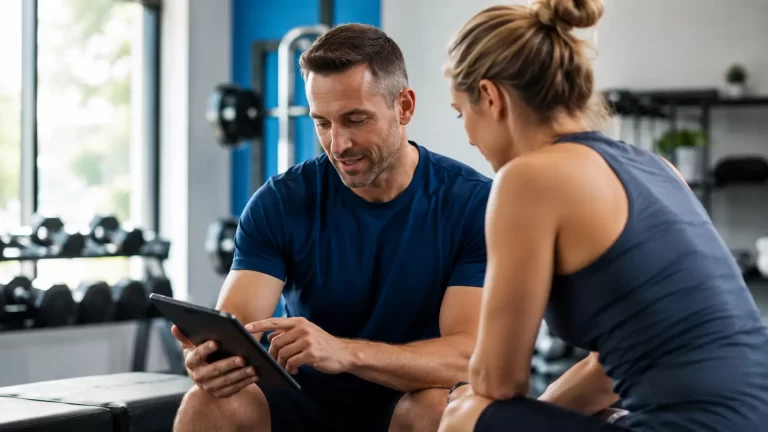
Exercise physiologist or personal trainer, which one do you actually need? It’s one of the most common questions we hear from clients across Glendale, Lake Macquarie and Newcastle, and honestly, the lines have gotten blurry.
Both help you train. Both can build you a program. Here are 5 real differences that actually matter when you’re choosing.
5 differences between an exercise physiologist and a personal trainer
Qualifications. An accredited exercise physiologist is a university-qualified allied health professional, recognised by Exercise & Sports Science Australia. A personal trainer typically holds a fitness industry certificate, which is valuable for coaching, but a different level of clinical training.
Scope of care. Exercise physiologists are trained to work with injury, chronic pain, chronic conditions, and complex health needs, alongside general strength training goals. A personal trainer is skilled at coaching general fitness and motivation, but isn’t trained to manage clinical conditions the same way.
Approach. At Coastline, we blend both worlds. We use strength and conditioning principles, the same ones used with athletes, applied through a clinical lens that accounts for injury history, pain, and individual movement patterns.
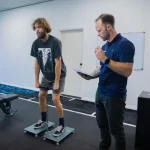
How progress is tracked. We track your progress using VALD technology, so decisions about your strength training program are based on real data, not guesswork. This is common in exercise physiology clinics, less so in general personal training.
Funding support. Depending on your situation, seeing an exercise physiologist may make you eligible for a Medicare rebate with a GP referral. Personal training doesn’t carry the same funding options.
Which one is right for you?
If you’ve had an injury, live with chronic pain, manage a health condition, or you’re just not sure your body can handle a generic program, start with an exercise physiologist. You can always add personal training support later once your foundation is solid. Our clinics in Glendale and Williamtown serve clients right across Lake Macquarie and Newcastle, whichever path fits you best.
Frequently Asked Questions
How do I start exercising again after a long break?
Start with lighter loads than you think you need, and build gradually based on how your body responds. A structured plan makes it easier to track progress and stay consistent.
Will I lose all my previous fitness if I've had time off?
Some strength and fitness naturally decreases with time off, but your body typically rebuilds capacity faster than it did the first time, once you begin training consistently again.
Should I push through soreness when restarting the gym?
Some muscle soreness after a new session is normal. Sharp pain or soreness that stops you moving properly is a signal to ease back and check in with your exercise physiologist.
Do I need a program, or can I just start on my own?
You can start on your own, but a program matched to your current strength and goals helps you avoid setbacks and builds confidence faster.


Contact US
Helping you rebuild strength across Lake Macquarie, Newcastle, & Port Stephens.
- 2/545 Main Rd, Glendale NSW 2285, Australia
- 02 7226 9384
- 2 Technology Pl, Williamtown NSW 2318, Australia
- +61 2 4989 5151